தமிழியல் பரிமாணங்கள்

Dimensions of Tamil Studies (DTS)

அறிஞர்களால் மதிப்பீடு செய்யப்படும் காலாண்டு சர்வதேசத் தமிழ் ஆய்விதழ்

Peer-Reviewed Quarterly International Journal of Tamil Studies

இதழ் தொகுப்புகள்
Archives

இதழ் தொகுப்பு – அறிமுகம்

தமிழியல் பரிமாணங்கள் (Dimensions of Tamil Studies) அறிஞர்களால் மதிப்பீடு செய்யப்படும் காலாண்டு சர்வதேசத் தமிழ் ஆய்விதழாகும்.

இந்த ஆய்விதழ் 2026 ஆம் ஆண்டில் தொடங்கப்பட்டது. 2026 ஆம் ஆண்டு தொடக்க ஆண்டாக இருப்பதால், செப்டம்பர் மற்றும் டிசம்பர் மாதங்களில் இரண்டு இதழ்கள் வெளியிடத் திட்டமிடப்பட்டுள்ளன. 2027 முதல் மார்ச், ஜூன், செப்டம்பர் மற்றும் டிசம்பர் மாதங்களில் வழக்கமான காலாண்டு வெளியீட்டு முறை பின்பற்றப்படும்.

இதழின் வெளியீடுகள் தொகுதி, இதழ் மற்றும் ஆய்வுக் கட்டுரை அடிப்படையில் இப்பக்கத்தில் தொகுக்கப்படுகின்றன.

Volume 1 – 2026

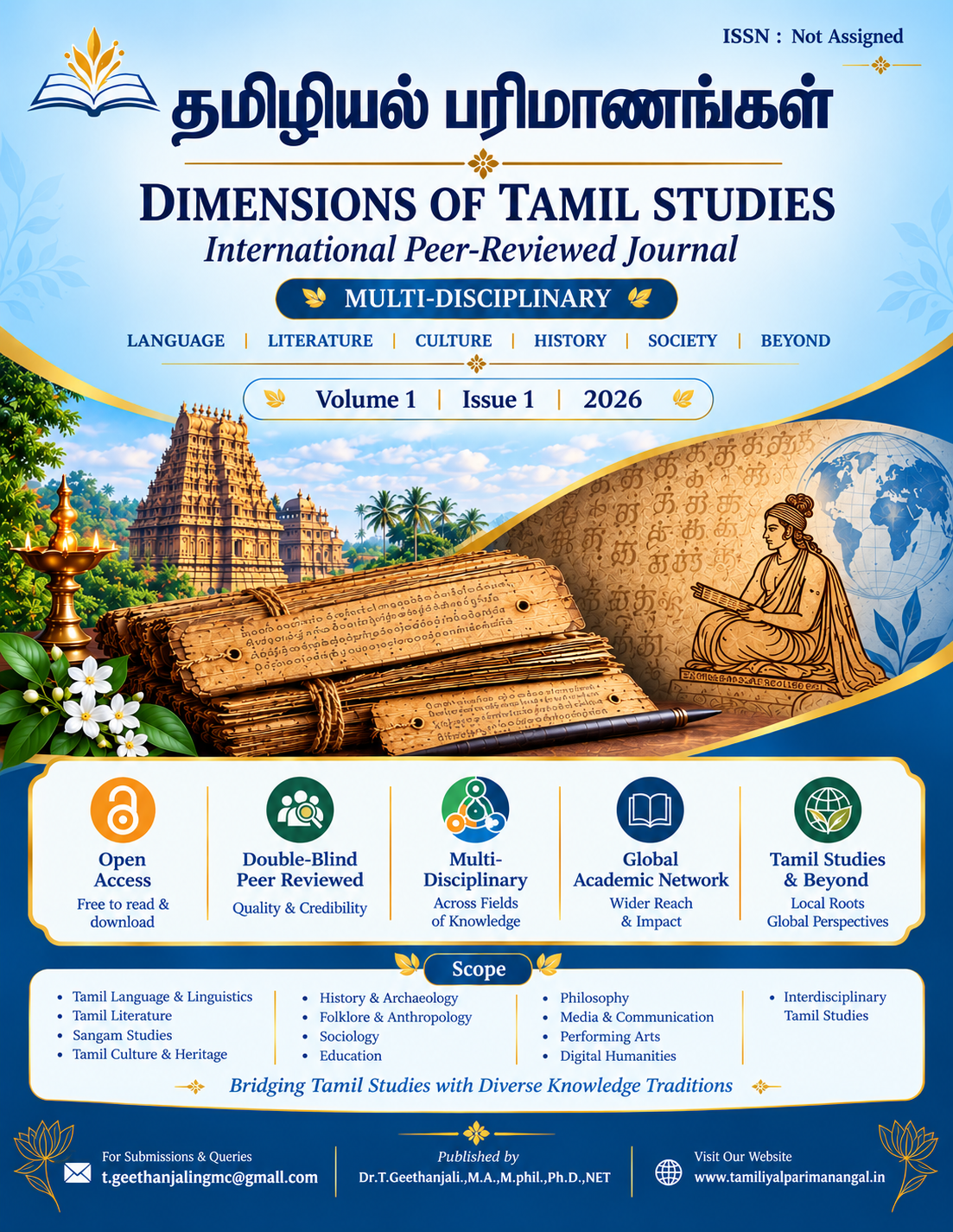
Volume 1 Issue 1 September 2026 Journal Cover

Volume 1, Issue 1 – September 2026

Volume 1, Issue 1 – September 2026

திலகவதி சிறுகதைகளில் பெண்களின் சமூகச் சிக்கல்கள்


முனைவர் த. கீதாஞ்சலி

Social Issues of Women in Thilagavathi’s Short Stories

ஆசிரியர்: முனைவர் த. கீதாஞ்சலி

Abstract: Women’s issues have occupied an important place in contemporary Tamil literature, particularly in the short stories of Thilagavathi. Her short stories portray the various social challenges faced by women within the family and society and reveal the impact of patriarchal attitudes on their lives. This article examines the representation of women-related social issues in Thilagavathi’s short stories, with particular focus on the neglect of the girl child, sexual violence, harassment of women, and the problems encountered by working women. It also analyses the ways in which women respond to these challenges and the consequences arising from such social conditions. The discussion highlights gender discrimination, the preference for male children, and socio-economic factors associated with marriage expenses and dowry. Thus, Thilagavathi’s short stories serve as a literary representation of women’s struggles and contribute to creating awareness about gender equality and social change.

Keywords: Thilagavathi, Tamil Short Stories, Women’s Issues, Girl Child Neglect, Gender Discrimination, Patriarchy, Women’s Empowerment, Social Problems

தனி கட்டுரைப் பக்கத்தைப் பார்க்க

சங்கப்பாடல்களில் படிமங்களும் குறியீடும்


முனைவர் வ. கிருஷ்ணன்

Imagery and Symbolism in Sangam Poems

ஆசிரியர்: முனைவர் வ. கிருஷ்ணன்

பதவி: துறைத்தலைவர், அரசு கலைக்கல்லூரி, உடுமலைப்பேட்டை

Abstract: This research article examines the use of imagery and symbolism in Sangam poetry, with particular attention to the poems of Sangam poets such as Avvaiyar, Devakulaththar, and Kapilar. Sangam literature serves as an important repository of the historical, social, cultural, and emotional experiences of ancient Tamil society. In these poems, imagery and symbols play a significant role in expressing subtle emotions, relationships, experiences, and ideas through vivid verbal pictures. The study reveals that imagery and symbolism enhance the aesthetic quality of Sangam poetry while also enabling poets to communicate complex human emotions in a concise and evocative manner. Thus, the imaginative techniques employed in Sangam poetry contribute significantly to its enduring literary and cultural value.

Keywords: Sangam Literature, Sangam Poetry, Imagery, Symbolism, Simile, Metaphor, Avvaiyar, Kapilar, Devakulaththar, Tamil Literature

தனி கட்டுரைப் பக்கத்தைப் பார்க்க

சங்க ஐந்திணை மரபு


க. கதிரவன்

The Sangam Tradition of the Five Tinais

ஆசிரியர்: க. கதிரவன்

பதவி: துணைப்பேராசிரியர், தமிழ்த்துறை (ஆய்வுமையம்), அரசுக்கல்லூரி, சித்தூர், பாலக்காடு 678 104.

Abstract: The five major tinai categories of Tamil akam tradition—Kurinji, Mullai, Marutham, Neithal, and Palai—occupy an important place in Tamil grammatical and literary traditions. However, these five tinai are not arranged in a uniform order across grammatical texts and literary works. This study comparatively examines the different methods of arranging the five tinai found in major Tamil grammatical texts and Sangam and post-Sangam literature. The study considers the arrangements found in works such as Tolkappiyam, Iraiyanar Akapporul, Nambiyagapporul, Virasoliyam, Swaminatham, Thonnul Vilakkam, and Tamilneri Vilakkam, and compares them with the arrangements found in Akananuru, Ainkurunuru, Kalithogai, and selected Patinenkilkanakku works. Since the five tinai can theoretically be arranged in 120 different orders, the variations observed across texts are significant. The study further examines possible factors underlying these arrangements, including the number of poems assigned to each tinai, the distinctive characteristics and aesthetic qualities of the tinai, and the influence of poets and compilers. Particular attention is given to the arrangement of tinai in Kalithogai and the position of Nallanthuvanar’s Neithal poems at the end of the collection. The study also relates this practice to the broader Tamil literary tradition of placing the author’s own work or name at the conclusion of a collection. The findings suggest that the arrangement of tinai was not governed by a single fixed convention but was influenced by the literary, structural, and editorial choices of authors and compilers.

Keywords: Tinai, Arrangement of Tinai, Five Tinai, Akam Tradition, Sangam Literature, Tamil Grammatical Texts, Kalithogai, Akananuru, Ainkurunuru, Compilation Method

தனி கட்டுரைப் பக்கத்தைப் பார்க்க

சீவகசிந்தாமணியில் அறிவியல் செய்திகள்


அ. வனிதா

Scientific Concepts in Civaka Cintamani

ஆசிரியர்: அ. வனிதா

பதவி: உதவிப்பேராசிரியர், தமிழ்த்துறை, எத்திராஜ் மகளிர் கல்லூரி, சென்னை - 8

Abstract: Science and technology have become integral to the modern world, with numerous technological devices and mechanisms emerging as a result of scientific advancement. However, references to scientific ideas and technological devices can also be identified in ancient Tamil literature. Civaka Cintamani, composed by Tiruttakkatevar, provides significant evidence of such scientific knowledge and technological imagination. The present study examines the scientific information found in Civaka Cintamani, with particular attention to the various mechanical devices described in the work. The text contains references to a wide range of mechanisms associated with warfare, security, transportation, agriculture, and other practical activities. Among these are devices capable of projecting arrows, spears, and stones, mechanical traps, animal-shaped mechanisms, devices producing molten substances, and other defensive and offensive instruments. References to devices such as the lightning conductor, mechanical chariot, and sugarcane-crushing machine further reveal the technological ideas represented in the text. The descriptions of the numerous mechanisms installed on the fortifications of King Saccandan’s palace demonstrate the sophisticated imagination of mechanical technology in the literary context of the period. This study seeks to identify, classify, and interpret these scientific and technological references in order to understand the contribution of Civaka Cintamani to the history of scientific thought in Tamil literature. The study highlights the presence of scientific awareness and technological imagination in medieval Tamil literary traditions.

Keywords: Civaka Cintamani, Scientific Concepts, Tamil Literature, Science and Technology, Mechanical Devices, Ancient Technology, Tiruttakkatevar, Tamil Scientific Thought, Technological Knowledge, Medieval Tamil Literature

தனி கட்டுரைப் பக்கத்தைப் பார்க்க

சங்க இலக்கியத்தில் காந்தள் மலர்


முனைவர் ப. இளங்கோ

Kantal Flower in Sangam Literature

ஆசிரியர்: முனைவர் ப. இளங்கோ

பதவி: உதவிப்பேராசிரியர், தமிழாய்வுத்துறை, பி.ஜி.பி கலை அறிவியல் கல்லூரி, நாமக்கல் – 7

Abstract: Sangam literature provides a rich and detailed representation of the natural world and the close relationship between ancient Tamils and their environment. Although considerable research has been undertaken on themes such as love, valour, generosity, fame, and nature in Sangam literature, individual flowers mentioned in these works have received comparatively less attention. The Kantal flower is one such significant element of the Sangam landscape that deserves closer study. The present research examines the references to the Kantal flower in Sangam literature from a literary and scientific perspective. Sangam poets observed the natural environment with remarkable sensitivity and incorporated various plants, flowers, trees, and ecological features into their poetic compositions. The Kantal flower, its appearance, characteristics, habitat, and association with the landscape are explored through relevant Sangam literary references. The study seeks to identify the botanical and ecological information embedded in the poetic descriptions and to understand how such observations contribute to our knowledge of the natural environment of ancient Tamil society. By examining the Kantal flower through both literary interpretation and a scientific perspective, this study highlights the ecological awareness and close observation of nature evident in Sangam poetry. It also demonstrates the value of Sangam literature as a source for understanding the interaction between Tamil literary imagination, traditional ecological knowledge, and the natural world.

Keywords: Kantal Flower, Sangam Literature, Tamil Literature, Natural Environment, Botanical Knowledge, Traditional Ecological Knowledge, Sangam Poetry, Ancient Tamil Society, Flora, Nature Studies

தனி கட்டுரைப் பக்கத்தைப் பார்க்க

Volume 1, Issue 2 – December 2026

இரண்டாவது இதழ்

விரைவில்

2026 – Inaugural Publication Schedule

2026 ஆம் ஆண்டு ஆய்விதழின் தொடக்க ஆண்டாகும். இந்த ஆண்டிற்கான இதழ்கள் பின்வருமாறு திட்டமிடப்பட்டுள்ளன:

  1. Volume 1, Issue 1 – September 2026
    தொடக்க இதழ்
  2. Volume 1, Issue 2 – December 2026
    இரண்டாவது இதழ்

Regular Quarterly Publication Schedule (From 2027)

2027 முதல் வழக்கமான காலாண்டு வெளியீட்டு அட்டவணை:

  1. March Issue
    Submission: February 20–28
    Publication: March
  2. June Issue
    Submission: May 20–31
    Publication: June
  3. September Issue
    Submission: August 20–31
    Publication: September
  4. December Issue
    Submission: November 20–30
    Publication: December